




Software Development
Computer Software
Coding
Project Lombok
Project Lombok in 2026: Stop Writing Boilerplate Java Code and Start Shipping Features
Every getter. Every setter. Every toString method you write by hand is time not spent building features. Lombok eliminates that friction - and in 2026, when development speed matters more than ever, that's the difference between shipping and slipping schedule.
The Problem Every Java Developer Faces
You're building a Java backend application. You create a
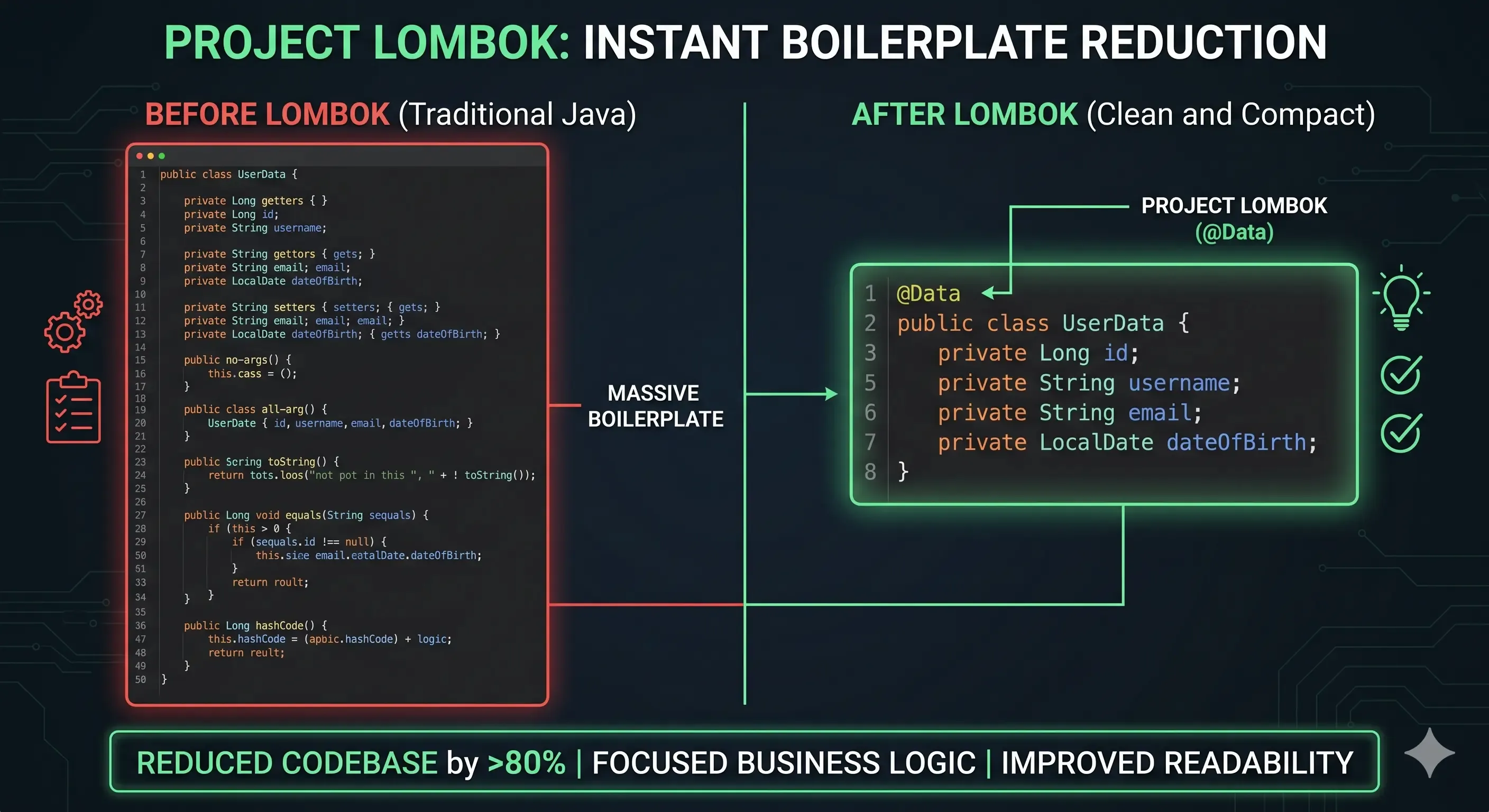
User class with five fields. Now you need getters. Setters. A constructor. An equals() method. A hashCode() method. A toString() method for debugging.That's 50+ lines of boilerplate code for a simple data container. And you're writing the same pattern in every class -
Customer, Product, Order, Payment. Hundreds of lines of identical, auto-generated-looking code that doesn't add any real value.This is the problem Lombok solves.
With a single annotation -
@Data - Lombok generates all of that boilerplate at compile time. Your source code stays clean. The compiled class has everything it needs. You focus on business logic, not repetitive code patterns.In 2026, when teams are shipping features faster than ever, writing boilerplate by hand isn't a sign of thoroughness - it's a sign you're using the wrong tools.
What Project Lombok Actually Is
Project Lombok is a Java library that uses annotations to automatically generate boilerplate code at compile time. It's not code generation you have to maintain manually - it's transparent, IDE-aware, and feels like a language feature.
How Lombok Works
- You add annotations to your Java class
- Lombok processes your code at compile time
- The
.classfile includes all the generated methods - Your source code stays clean and readable
- Your IDE understands the generated methods (no "method not found" errors)
It's like the Java compiler grew new superpowers.
Why Lombok Matters
Readability - Less boilerplate means you can see the actual logic and structure of a class at a glance.
Maintainability - Change a field name? Lombok updates all getters, setters, equals, hashCode, and toString automatically. No manually updating 5 different places.
Speed - A class that takes 50 lines to write now takes 5 lines. That's a 10x reduction in code you have to write and maintain.
Correctness - Less code means fewer bugs. You can't forget to update hashCode when you add a field if Lombok generates it automatically.
The Core Lombok Annotations
@Data - The Swiss Army Knife
@Data is the most powerful annotation. It's equivalent to having:@Getteron all fields@Setteron all fields@ToString@EqualsAndHashCode@RequiredArgsConstructor
@Data
public class User {
    private Long id;
    private String email;
    private String name;
    private boolean active;
}
This single class generates:
- Getters and setters for all fields
equals()andhashCode()based on all fieldstoString()method- Constructor with required arguments (final or @NonNull fields)
That's probably 80+ lines of generated code from 4 lines of source.
Constructor Annotations
@NoArgsConstructor - Generates a constructor with no arguments
@NoArgsConstructor
public class User { ... }
// Generates: public User() { }
@RequiredArgsConstructor - Generates constructor with one argument per final or @NonNull field
@RequiredArgsConstructor
public class User {
    private final Long id;
    private final String email;
    private String name;  // not final, not included
}
// Generates: public User(Long id, String email) { ... }
@AllArgsConstructor - Generates constructor with one argument for every field
@AllArgsConstructor
public class User { ... }
// Generates: public User(Long id, String email, String name, boolean active) { ... }
The Builder Pattern
@Builder - Generates the code to use the builder pattern without writing it manually
@Builder
public class User {
    private Long id;
    private String email;
    private String name;
}

// Usage:
User user = User.builder()
    .id(1L)
    .email("[email protected]")
    .name("Alice")
    .build();
The builder pattern is verbose to write manually.
@Builder eliminates that entirely.Functional Annotations
@Getter and @Setter - Generate getters and setters for specific fields or the entire class
@Getter
@Setter
public class User {
    private String email;
    private String password;
}
@ToString - Generates the
toString() method@ToString
public class User { ... }
// toString() output: User(id=1, [email protected], name=Alice, active=true)
@EqualsAndHashCode - Generates
equals() and hashCode() based on fields@EqualsAndHashCode
public class User { ... }
Null Checking and Logging
@NonNull - Generates null checks on constructor or method parameters
public class UserService {
    public void saveUser(@NonNull User user) {
        // Lombok generates: if (user == null) throw new NullPointerException("user");
    }
}
@Slf4j, @Log4j2, @CommonsLog - Generates logger initialization
@Slf4j
public class UserService {
    public void processUser(User user) {
        log.info("Processing user: {}", user.getEmail());  // log is auto-generated
    }
}
Instead of:
private static final Logger log = LoggerFactory.getLogger(UserService.class);
Lombok generates it automatically.
Lombok in Spring Boot Applications
Spring Boot developers benefit enormously from Lombok because Spring emphasizes data-driven development with lots of entity and DTO classes.
Example: JPA Entity
Before Lombok:
@Entity
@Table(name = "users")
public class User {
    @Id
    private Long id;

    private String email;
    private String name;
    private boolean active;

    public Long getId() { return id; }
    public void setId(Long id) { this.id = id; }

    public String getEmail() { return email; }
    public void setEmail(String email) { this.email = email; }

    public String getName() { return name; }
    public void setName(String name) { this.name = name; }

    public boolean isActive() { return active; }
    public void setActive(boolean active) { this.active = active; }

    @Override
    public String toString() { ... }

    @Override
    public boolean equals(Object o) { ... }

    @Override
    public int hashCode() { ... }
}
With Lombok:
@Entity
@Table(name = "users")
@Data
public class User {
    @Id
    private Long id;

    private String email;
    private String name;
    private boolean active;
}
Same functionality. 75% less code.
Learning Java with Lombok
If you're building Java applications in 2026, using Lombok is table stakes. It's not an advanced optimization - it's a fundamental developer tool.
At Archi's Academy, Lombok best practices are integrated into Java and Spring Boot courses.
Start with Java Fundamentals
Learn Java's core concepts - object-oriented programming, generics, streams, exception handling - then layer Lombok on top to write cleaner code.
Build Real Projects with Lombok
Theory is useful, but you learn fastest by building. Archi's Academy has project templates where you can practice Java and Lombok in realistic scenarios:
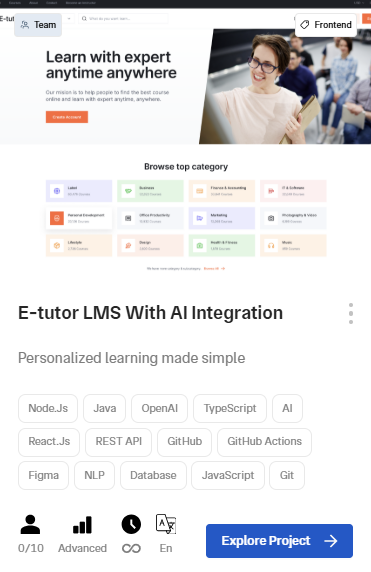
E-Tutor System - A complete tutoring platform with user management, course listings, and booking. Perfect for practicing entities, DTOs, and REST APIs with clean Lombok-based code.
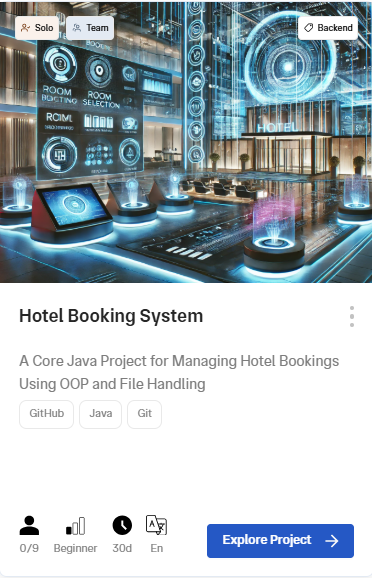
Hotel Booking System - A hotel management and reservation system. Complex entities, relationships, and business logic - great for learning how Lombok scales to real applications.
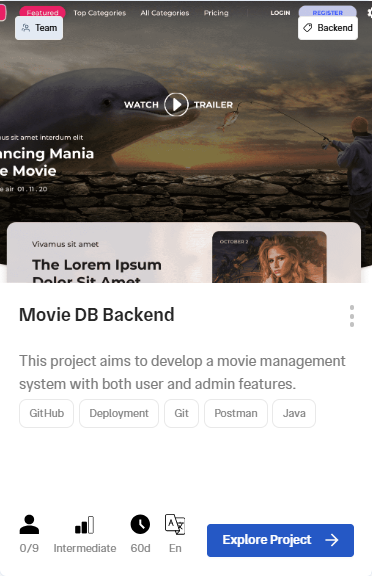
Movie Database Application - A movie catalog and rating system. Simpler scope but covers all the core patterns of data-driven Java applications.
Explore All Project Templates
Best Practices for Using Lombok
1. Use @Data Carefully
@Data is powerful but generates methods for all fields. If you only want some fields included in equals() and hashCode(), use @Data with exclusions:@Data
public class User {
private Long id;
private String email;
@ToString.Exclude
@EqualsAndHashCode.Exclude
private String password; // Excluded from generated methods
}
2. Be Explicit About Constructors
Mix different constructor annotations thoughtfully:
@Data
@NoArgsConstructor  // JPA requires this
@AllArgsConstructor(access = AccessLevel.PRIVATE)  // For Builder
@Builder
public class User {
    private Long id;
    private String email;
}
3. Logging Should Be Strategic
Use
@Slf4j at the class level, not everywhere:@Slf4j
@Service
public class UserService {
public void createUser(User user) {
log.info("Creating user: {}", user.getEmail());
}
}
4. Document Generated Methods
Your IDE shows generated methods, but document intent in comments:
/**
 * User entity with JPA support.
 * Lombok generates: getters, setters, equals, hashCode, toString, constructors
 */
@Data
@Entity
public class User { ... }
Common Misconceptions
"Lombok is black magic"
It's just code generation. You can disable it and see exactly what code it generates. Most IDEs show generated methods clearly.
"Lombok code isn't production-ready"
Lombok is used in production by companies like Netflix, Uber, and LinkedIn. It's thoroughly battle-tested.
"I don't need it, I can just write getters and setters"
You can. And you can manually calculate SHA-256 hashes by hand too. That doesn't mean you should.
"It's hard to debug"
Your debugger sees the generated methods. You can step through them. You can even set breakpoints in generated code.
The Bottom Line: Stop Writing Boilerplate
Every hour you spend writing getters, setters, and constructors is an hour not spent building features, fixing bugs, or improving performance.
Lombok doesn't make you a better programmer. But it frees you to spend time on things that do. In 2026, when development velocity matters, that's a real competitive advantage.
Learn by Doing. Prove by Doing. Get Hired.
Have questions about Lombok, Java development, or which project template to start with? The Archi's Academy team is here to help - reach out anytime.

Monday, Apr 26, 2021