

BLACK FRIDAY
85% Discount for all November
85% Discount for all November


The short versionLalasia is an interior design showroom built with React and Next.js by a small Archi's Academy trainee team. With their team lead's guidance they shipped a portfolio piece that blends aesthetic UI work with a serious modern framework, exactly the combination senior frontends are paid for.
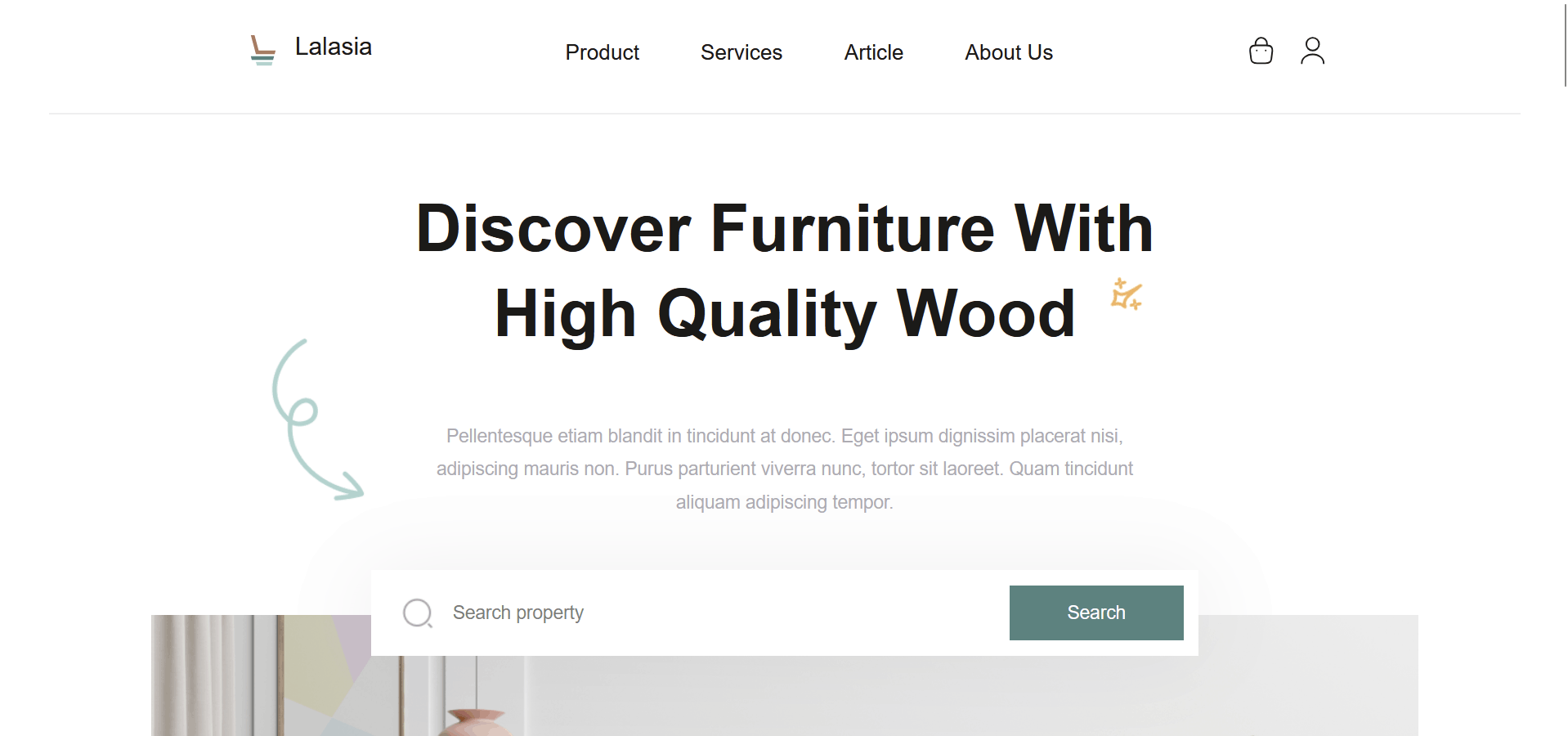
Real, portfolio-ready features that hiring managers actually look for
Lalasia is a design-led interior showroom built on React and Next.js. The application presents curated furniture collections through a gallery-style homepage, detailed product pages with image carousels, and server-rendered category pages tuned for performance and SEO. Subtle animations and micro-interactions add the polish expected of premium design-driven brands, while a working inquiry flow handles lead generation.
The project applies modern React and Next.js engineering practices to a content-heavy, design-led product. The trainee team begins by analyzing the Figma file, identifying shared design tokens, and agreeing on a component taxonomy before writing implementation code. From there the work proceeds in feature-based sprints, with each pull request reviewed by teammates and signed off by the team lead.
Technical priorities include Next.js Image-based optimization for the heavy photography, responsive component composition for the gallery layouts, server-rendered metadata for SEO, and accessibility-first interactions. Performance is monitored throughout the project, with Lighthouse scores tracked as a quality gate rather than a one-time check at the end.
Lalasia gives you a rare combination: design-led frontend depth on a serious modern framework. You will learn React component patterns for content-heavy sites, Next.js routing and layouts, Next.js Image-based optimization for high-quality photography, and the subtle craft of micro-interactions that feel professional rather than gimmicky. You will leave with a working understanding of how design and engineering negotiate trade-offs in real product teams.
You will also build the collaboration skills that design-led companies hire for specifically. Working from a high-fidelity Figma file as a team means agreeing on shared tokens, splitting a content-heavy build across teammates, reviewing each other's React patterns for consistency, and negotiating design fidelity versus implementation complexity constructively. These conversations are where junior engineers either grow or stall.
What you walk away with is a portfolio site that looks expensive and a track record of shipping work that respects both code quality and visual polish. That combination is exactly what gets you the interview at the design-led startup or agency you actually want to work for.
You will join a small trainee team under your team lead's supervision. You begin with design alignment and shared tokens, then build out features by domain, opening peer-reviewed pull requests for every change. Your team lead provides architectural guidance, design-fidelity feedback, and performance review notes throughout the build. By completion, you will own a polished, deployed React plus Next.js application that demonstrates the rare combination of aesthetic sensitivity and engineering rigor that design-led companies actively hire for.
Get the same project brief, starter kit, and team workflow our trainees used. Build it. Ship it. Show it to recruiters.
StartThisProjectFree

Concrete career outcomes — not just another tutorial finished
Get the same project brief, starter kit, and team workflow our trainees used. Build it. Ship it. Show it to recruiters.