

BLACK FRIDAY
85% Discount for all November
85% Discount for all November


The short versionFasco is a trendy fashion boutique with interactive product views and a working cart, built by a small trainee team under their team lead's guidance using HTML, CSS, and JavaScript. It is the proof you can ship a polished, interactive e-commerce site without a single framework dependency.
Real, portfolio-ready features that hiring managers actually look for
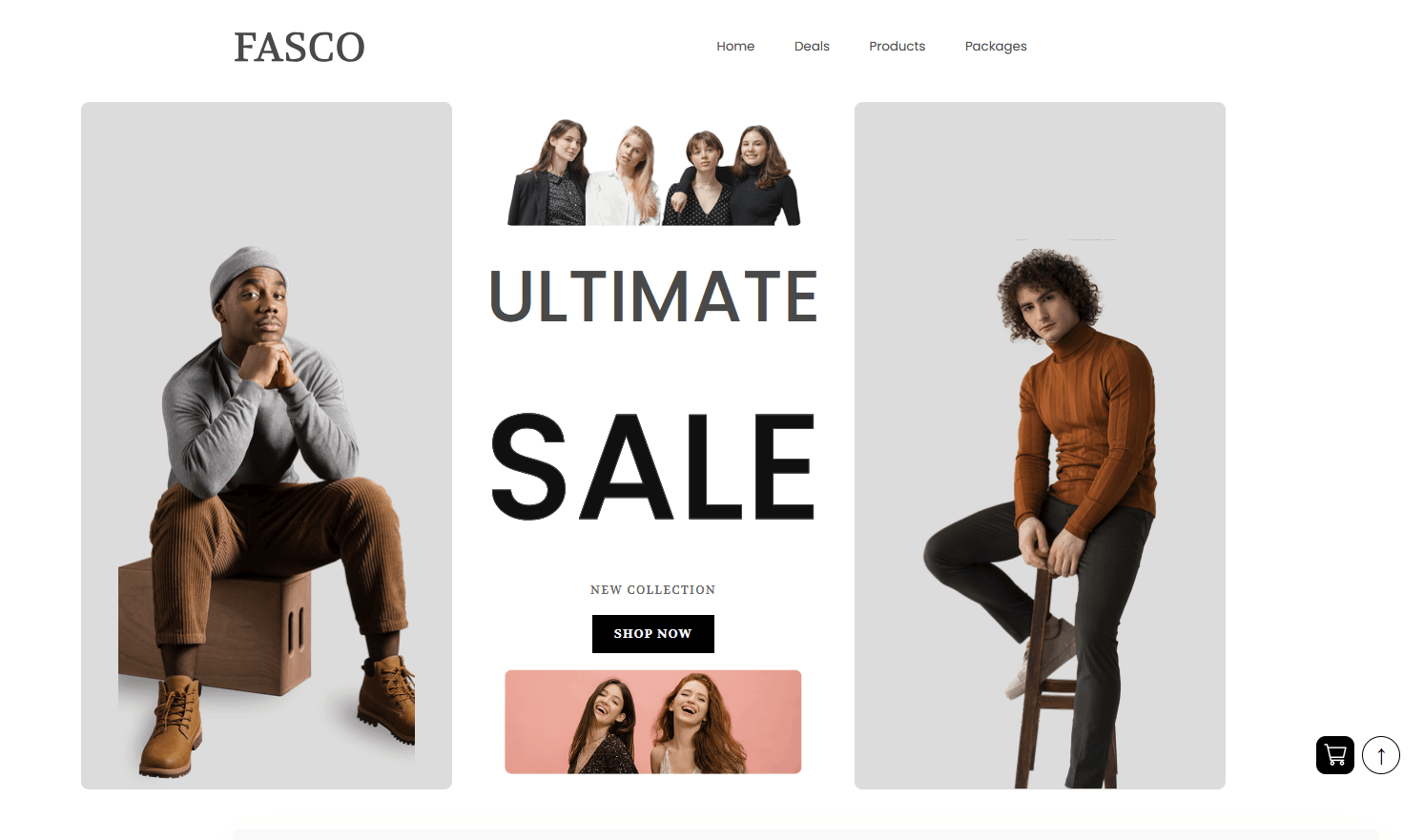
Fasco is a design-led fashion boutique storefront built without any framework. The application combines editorial-style homepage layouts, listing pages with sort and filter, product detail pages with image galleries and size pickers, and a fully working cart. Photography-led and mobile-first, Fasco demonstrates that interactive, polished commerce is achievable with disciplined use of the platform alone.
The build follows a professional design-led engineering process. The trainee team begins by analyzing the Figma file across mobile, tablet, and desktop breakpoints, identifying the CSS Grid layouts and shared interaction patterns the build will need. Implementation proceeds in feature-based sprints, with peer code review on every pull request and team lead sign-off before merge.
Technical priorities include modern CSS Grid for editorial layouts, clean JavaScript module patterns for cart and gallery state, accessibility-first interactions with full keyboard support, and performance-conscious image handling. Code review focuses on both correctness and design fidelity, since the brief requires pixel-accurate translation of the Figma.
Fasco grows your CSS Grid mastery, your JavaScript module discipline, and your eye for the small details that separate a tutorial project from real product work. You will learn editorial-style layouts that do not fall out of a generic twelve-column grid, image galleries that feel smooth without dropping frames, form validation that respects users, and accessibility practices that should not be optional but often are.
The team side teaches you how to ship to a high design bar without slowing the build down. You will pair on tricky interactions when they are worth pairing on, split feature branches cleanly when they are not, review pull requests against both code quality and design fidelity, and demo work to your teammates before merging. These are the negotiations that design-led companies hire frontend engineers to handle gracefully.
You leave with a deployed editorial storefront in your portfolio, a repository with clean branch history and meaningful code review, and the unusual combination of platform depth plus aesthetic sensitivity. For any frontend interview at a design-conscious company, that combination is what gets you the offer.
You will join a small trainee team under your team lead's supervision. You begin with the homepage layout, build out listing and detail pages, implement the cart and gallery interactions, and finish with polish and performance. Your team lead reviews each pull request for both code quality and design fidelity. By the end, you will own a deployed, editorial-style storefront and a portfolio piece that demonstrates the rare ability to combine vanilla JavaScript depth with design-led polish.
Get the same project brief, starter kit, and team workflow our trainees used. Build it. Ship it. Show it to recruiters.
StartThisProjectFree

Concrete career outcomes — not just another tutorial finished
Get the same project brief, starter kit, and team workflow our trainees used. Build it. Ship it. Show it to recruiters.