

BLACK FRIDAY
85% Discount for all November
85% Discount for all November


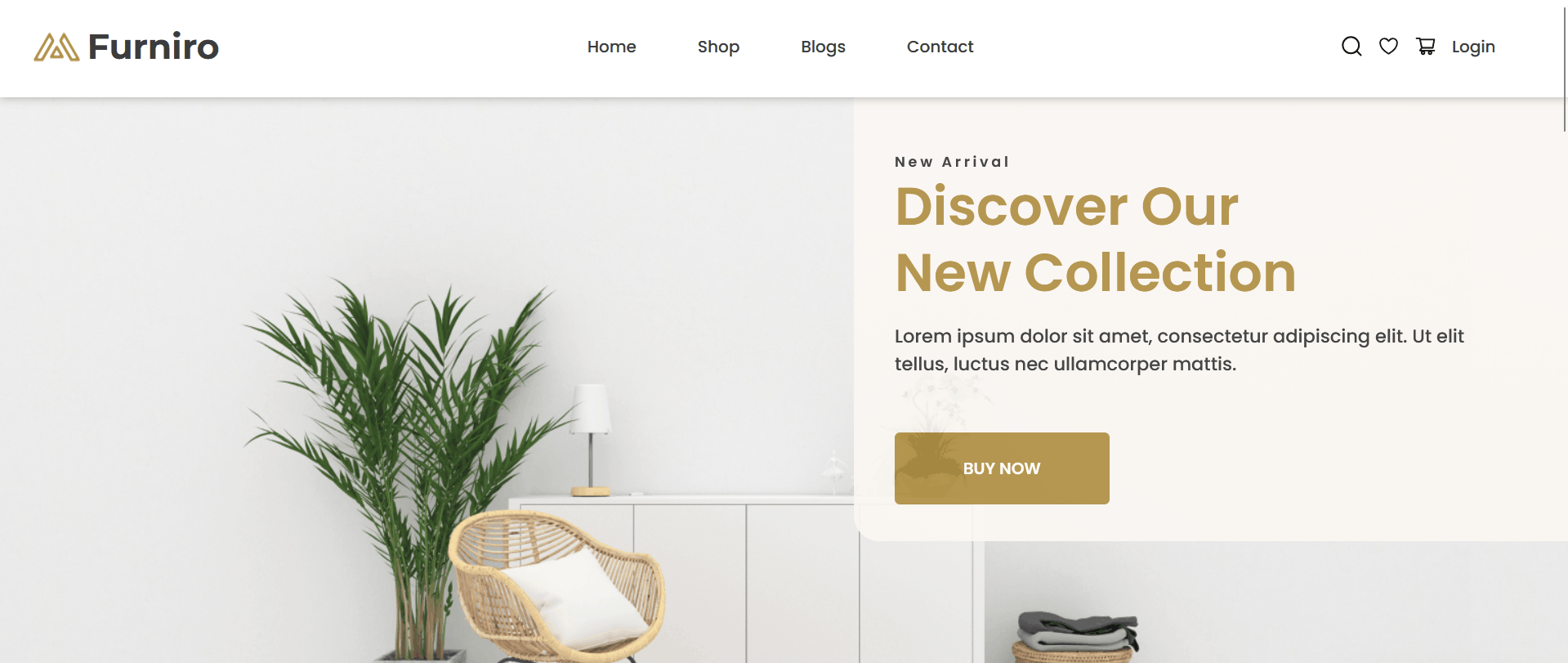
The short versionFurniro is a portfolio-ready furniture e-commerce store built by a small trainee team with their team lead's guidance. You will ship a real product catalog, working cart, and checkout flow using React and a headless CMS. It is the kind of project hiring managers ask about in interviews.
Real, portfolio-ready features that hiring managers actually look for
Furniro is a fully working furniture e-commerce platform. Visitors browse a curated catalog of interior design products, build a cart, and proceed through a complete checkout flow. The application combines a polished, accessible interface with structured product data served from a headless CMS, matching the standard architecture used by modern retail teams.
The project follows the engineering process used in real product teams. The trainee team works through clear phases: requirements discovery, component architecture, iterative implementation, peer code review, and final polish. The work is organized into sprints with measurable milestones, and every pull request is reviewed by both teammates and the team lead before merge.
Technically, the build emphasizes modular React component design, predictable state management for the cart and catalog, separation of concerns between presentation and content (via the headless CMS), and mobile-first responsive layouts. Accessibility, semantic HTML, and clean Sass architecture are treated as non-negotiable from the first sprint, not as a polish-phase afterthought.
Furniro pushes you well past the React tutorial layer. On the technical side you will gain real fluency with component-driven architecture, predictable state management for catalog and cart flows, and the integration patterns that connect a frontend to a headless CMS over REST. You will write code that respects both performance and accessibility, and you will learn what production-grade Sass looks like when it has to scale across an application.
Equally important is the human side of building software. You will practice sprint discipline, breaking large features into reviewable tickets, writing clear pull request descriptions, and giving and receiving code review feedback. You will learn to ask the right questions in standups, to communicate blockers early, and to defend an architectural decision in writing when it matters. These are the habits hiring managers look for when they evaluate a junior engineer for their first role.
By the time you complete Furniro, you will have moved from someone who can follow a tutorial to someone who can ship a real product alongside a small team. You will walk away with deployed work, a clean repository, and the talking points that turn an interview from theoretical into concrete.
When you take on this project, you join a small trainee team under an experienced team lead. You begin by reading the brief, understanding the user flows, and breaking the work into tickets. From there you implement features in short, reviewable pull requests, coordinate releases with your teammates, and refine the build through regular review cycles. The brief provides design references, technical hints, and milestone checkpoints, but every implementation decision is yours to make and defend. By the time you finish, you will have a deployed live site, a clean public repository, and the practical, team-based experience hiring managers actively look for.
Get the same project brief, starter kit, and team workflow our trainees used. Build it. Ship it. Show it to recruiters.
StartThisProjectFree

Concrete career outcomes — not just another tutorial finished
Get the same project brief, starter kit, and team workflow our trainees used. Build it. Ship it. Show it to recruiters.