

BLACK FRIDAY
85% Discount for all November
85% Discount for all November


The short versionMovieDB is a movie discovery app that connects to a real public API, displays trending films, and updates in real time without a page reload. A trainee team built it under their team lead's guidance, and you will learn more about async JavaScript here than from any tutorial.
Real, portfolio-ready features that hiring managers actually look for
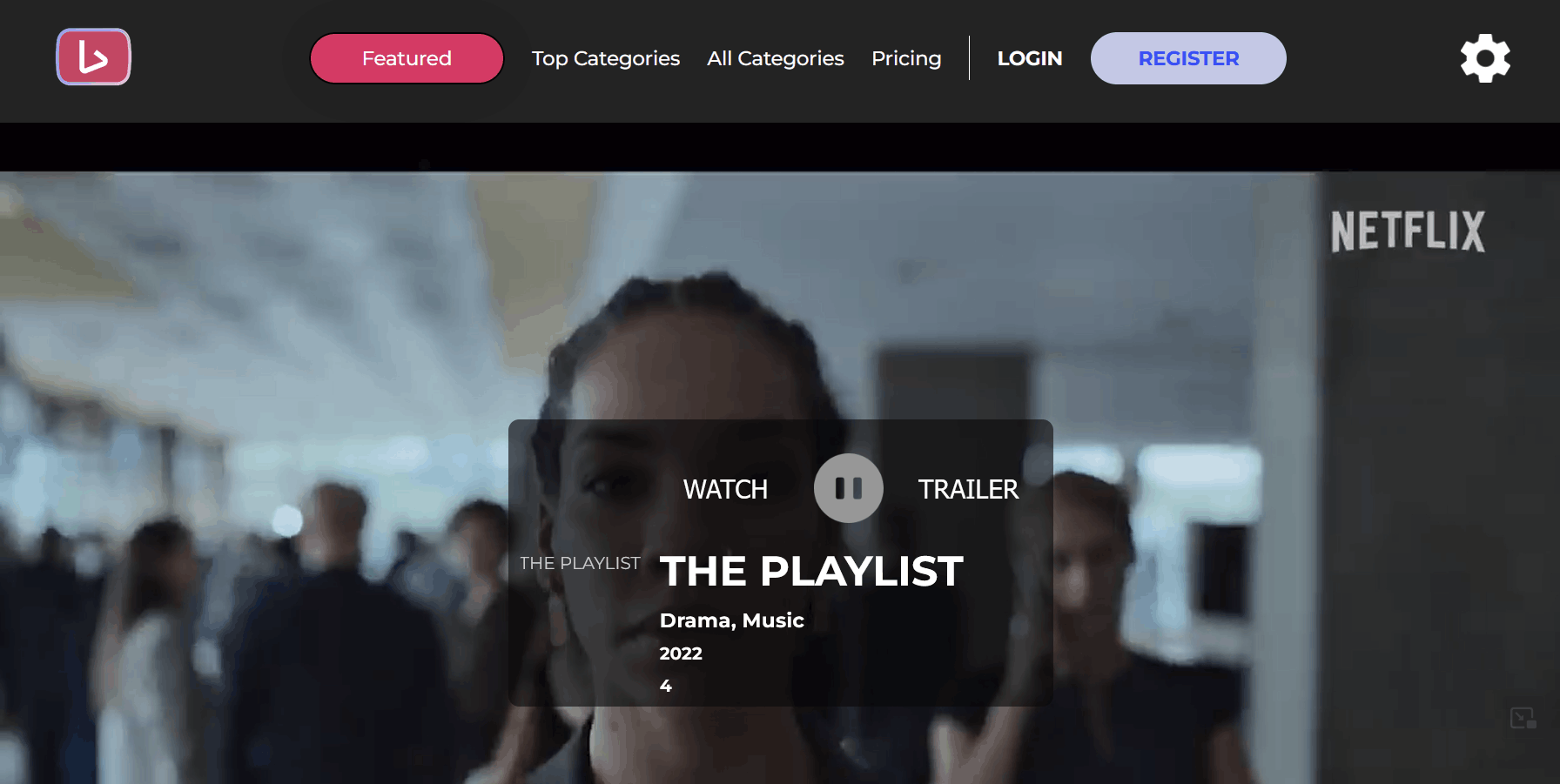
MovieDB is a working movie discovery application powered by a real public movie API. Users browse trending and top-rated films, search across the full catalog, filter by genre, and dig into detailed pages featuring cast, ratings, and trailer information. Every screen pulls live data, which forces the build to handle real-world concerns such as latency, rate limits, and inconsistent response shapes.
The build follows a clean, professional process for data-driven frontends. The trainee team begins by mapping the API surface, defining how each screen will consume the available endpoints. Implementation then proceeds in focused sprints under the team lead's guidance, with peer code review on every pull request.
Core engineering practices include modular Sass architecture (mixins, partials, design tokens) for maintainable styling, structured async patterns using promises and async/await for predictable data flow, debounced and cancellable input handling for the live search, and graceful loading and error states for every API call. These are not optional polish items; they are baked in from the first sprint.
MovieDB teaches you what most tutorials never address: working with real, messy data from an API you do not control. You will gain practical fluency with the fetch API, promises, async / await, error handling, and the patterns that keep async UI predictable. You will learn how to debounce input, handle rate limits gracefully, and design loading and error states that feel intentional rather than tacked on.
The collaboration side is just as important. You will work from a Figma design spec, coordinate API contract decisions with teammates, give and receive code review feedback, and communicate blockers before they become deadlines missed. These are the small, repeated practices that turn a solo learner into a team-ready engineer.
By the end you will have a deployed application that proves you can handle real-world data, a Sass codebase that actually scales, and the confidence to integrate any REST API into any frontend. For interviewers, that combination signals practical, hireable experience rather than coursework.
You will work on this project as part of a small trainee team under your team lead's supervision. You begin by understanding the API and planning your data flow. From there, you implement features incrementally, review your teammates' pull requests for clarity and correctness, and refine the build through regular check-ins. By the end, you will have a deployed live application, a well-organized Sass codebase, and demonstrable experience integrating a real third-party API into a frontend. That is exactly the kind of practical skill recruiters use to separate tutorial finishers from real builders.
Get the same project brief, starter kit, and team workflow our trainees used. Build it. Ship it. Show it to recruiters.
StartThisProjectFree

Concrete career outcomes — not just another tutorial finished
Get the same project brief, starter kit, and team workflow our trainees used. Build it. Ship it. Show it to recruiters.