

BLACK FRIDAY
85% Discount for all November
85% Discount for all November


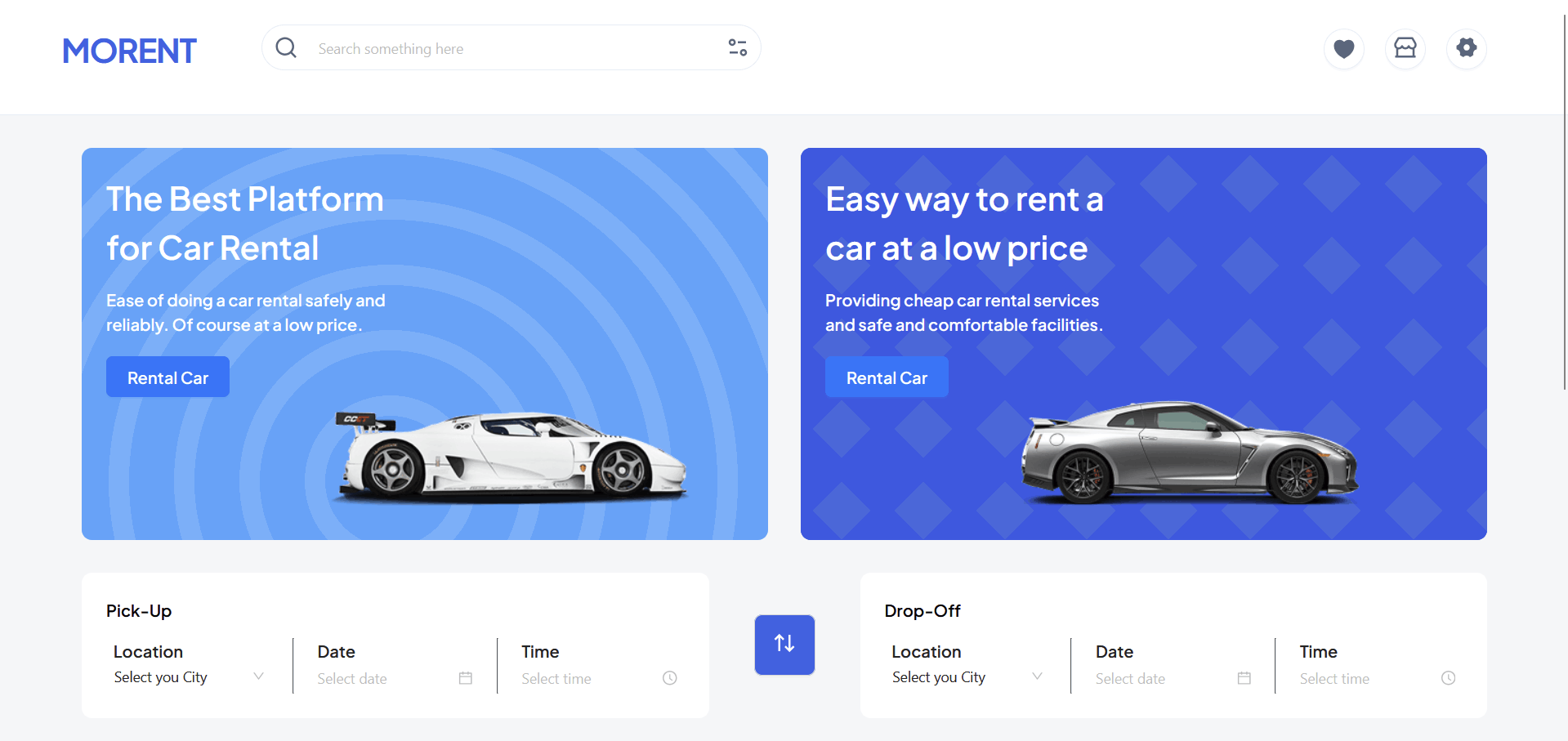
The short versionMorent is a car rental booking app built with the exact Next.js plus TypeScript plus Tailwind stack used at most modern startups. A small trainee team shipped it with their team lead's guidance, and you will do the same. Production-grade code on day one.
Real, portfolio-ready features that hiring managers actually look for
Morent is a fully working car rental booking application built on the production-grade Next.js, TypeScript, and Tailwind CSS stack. Users search by location and vehicle type, filter by availability, view detailed car information, and step through a complete booking flow. The application uses server-side rendering for performance and SEO, with type-safe data models running through every layer of the app.
The project applies modern engineering practices end to end. The trainee team begins by defining the domain model in TypeScript, agreeing on shared types for vehicles, bookings, and reservation states before any UI work begins. From there the build proceeds in feature-sized sprints, each delivered through a peer-reviewed pull request and signed off by the team lead.
Technical decisions are documented as short, written architectural notes so the team can review trade-offs together. Server components, client components, data fetching boundaries, and rendering strategies are deliberately chosen and explained. The result is a codebase that demonstrates clear engineering reasoning, not just working code.
Morent gives you direct, applied experience with the exact stack hiring teams write into junior frontend job descriptions today. You will learn the Next.js App Router properly, write TypeScript types that protect a real application, design data flow across server and client components, and ship Tailwind-styled UI that holds up under real traffic. You will leave with a deep understanding of when to render on the server and when to fall back to the client, which is the single most-asked question in modern React interviews.
On the team side, you will practice the engineering disciplines that distinguish a junior from a tutorial finisher. You will write short architectural notes when decisions get hard, review your teammates' TypeScript pull requests for correctness, and coordinate releases without breaking each other's work. You will learn to communicate trade-offs in writing and to advocate for your position constructively in code review.
What you walk away with is not just a portfolio piece. It is the practical, type-safe, production-aware mindset that lets you sit down on your first day at a startup and contribute the same week.
When you take this project on, you join a small trainee team under your team lead's supervision. You begin with the type definitions and shared models that anchor the rest of the build. You then split feature work by domain, open focused pull requests, review your teammates' code for type safety and architectural fit, and ship through coordinated releases. By completion, you will have a deployed, type-safe Next.js application in your portfolio and the practical experience that hiring teams use to evaluate junior production engineers.
Get the same project brief, starter kit, and team workflow our trainees used. Build it. Ship it. Show it to recruiters.
StartThisProjectFree

Concrete career outcomes — not just another tutorial finished
Get the same project brief, starter kit, and team workflow our trainees used. Build it. Ship it. Show it to recruiters.