




Software Development
Computer Software
Coding
Recruitment
Coding Bootcamp in 2026: Real Statistics, What They Miss, and How to Actually Get Hired
79% of coding bootcamp graduates report being employed in tech roles. But the other 21% spent $14,000 and 6 months of their life and didn't land a job. The difference between those two groups isn't talent. It's whether they built things employers can actually verify.
What Is a Coding Bootcamp?
A coding bootcamp is an intensive, short-form training program designed to teach practical programming skills in weeks or months rather than years. Most full-time bootcamp programs run 3 to 6 months, cost between $12,000 and $20,000, and focus on job-ready skills like web development, data science, UX/UI, or cybersecurity.
Coding bootcamps emerged in the early 2010s as a faster alternative to a four-year computer science degree. The pitch was compelling: skip the theory, learn what the job market actually needs, and start earning a developer's salary within a year.
In 2026, that promise holds up — for some graduates. Understanding when it does and doesn't is what this guide is about.
Coding Bootcamp Statistics in 2026: What the Data Actually Shows
Before deciding whether a coding bootcamp is worth it, the numbers matter. Here is what independently verified data shows in 2026.
Employment and Salary
- 79% of coding bootcamp graduates report being employed in a role requiring the technical skills they learned
- Average pre-bootcamp salary: $46,974
- Average post-bootcamp starting salary: $69,000–$70,698
- Median salary increase: 51% — approximately $23,000 per year
- Average time to recoup total tuition investment: 14 to 18 months
Program Costs
- Average coding bootcamp tuition: $11,874–$14,142
- Range across 600+ programs worldwide: under $500 to over $20,000
- Full-time program duration: 3 to 6 months
- Part-time programs: 6 to 12 months
Employer Perception
- 72% of employers believe coding bootcamp graduates are as prepared for the role as candidates with four-year degrees
- 53% of employers have removed degree requirements from job postings
- Hiring decisions increasingly hinge on technical interviews and portfolio projects, not credentials
These numbers present a strong case for bootcamps — but headline statistics tell an incomplete story. The 79% employment figure covers any role "requiring technical skills learned at bootcamp." Full-time software development role placement specifically is lower. And starting salaries of $55,000–$75,000 sit below what four-year CS graduates access at top-tier employers.
The question is not whether bootcamps work. They do, for the right candidates. The question is what makes the difference.
Coding Bootcamp vs Computer Science Degree vs Self-Taught: 2026 Comparison
| Coding Bootcamp | CS Degree | Self-Taught | |
|---|---|---|---|
| Time to job-ready | 6–12 months | 3–4 years | 1–2+ years |
| Cost | $12,000–$20,000 | $40,000–$200,000+ | $0–$2,000 |
| Structure | High | High | None |
| Employer recognition | Strong (72% parity) | Strongest | Variable |
| Practical skills | High (job-focused) | Mixed (theory-heavy) | Varies widely |
| Career ceiling | Grows with experience | Highest initially | Grows with portfolio |
| Success rate to job-ready | ~79% | ~90%+ | 15–30% |
| Portfolio output | Varies by program | Rarely structured | Self-directed |
| Best for | Career changers, fast entry | Long-term trajectory, research | Disciplined self-starters |
The five-year rule applies here: after five years of working experience, how you learned to code becomes nearly irrelevant. Employers evaluate your track record, your projects, and your judgment. The credential that got you through the first door fades into the background.
What Coding Bootcamps Get Right
Bootcamps succeed because they solve real problems that neither degrees nor self-study handle well.
Compressed, Job-Focused Curriculum
A four-year CS degree teaches distributed systems theory, computational complexity, and compiler design. Important foundational knowledge — but most junior developer roles need someone who can build a REST API, manage state in React, and write tests. Bootcamps go straight to the skills employers hire for.
Structured Accountability
Self-taught learning has a brutal dropout rate. Estimates put only 15–30% of self-taught learners reaching job-ready skill levels. Bootcamps provide cohort pressure, deadlines, instructors, and a structured progression that keeps people moving forward.
Career Services
The better bootcamps invest seriously in employer networks, mock interviews, resume review, and job placement support. For career changers entering tech with no existing professional network, this infrastructure has genuine value.
Speed
A motivated learner can go from zero coding experience to a first developer job in 9–12 months through a bootcamp. That timeline is difficult to match through a degree or unstructured self-study.
Where Most Coding Bootcamps Fall Short
The 21% who don't land jobs — and the larger proportion who land their first role but struggle to grow — share a common pattern. Their bootcamp taught them syntax and concepts but not how to work.
The Tutorial Trap
Most bootcamp projects are guided. You follow along with an instructor, build the same to-do app every other student built, and end up with a portfolio that looks identical to every other graduate from that cohort. When hiring managers see five identical CRUD applications, they cannot tell who actually understands the work.
No Real Feedback Loop
In a real engineering team, your code gets reviewed. A senior developer reads your pull request, asks why you made specific decisions, and pushes back on anything that doesn't hold up. That feedback loop is how junior developers grow fast. Most coding bootcamps skip it entirely.
The Portfolio Problem
Completing a bootcamp curriculum does not automatically produce a portfolio. Many graduates finish with projects that only run locally, have no README, and were built so quickly they cannot explain the decisions they made. In a job interview, "I followed the tutorial" is not a defensible answer.
The Gap Between Syntax and Systems Thinking
Writing code is the easy part of software engineering. Understanding how components connect, how to structure an application so it can grow, how to read an error message and trace it to a root cause across multiple files — these are the skills that determine whether a junior developer gets promoted or gets stuck. Most bootcamp curricula do not build them.
What Employers Actually Look For in 2026
The hiring conversation has moved. Submitting a bootcamp certificate no longer signals much on its own. What technical hiring managers evaluate is specific.
A portfolio of real, running projects. Not tutorial clones. Projects that solve an actual problem, have a deployed URL, and have a README that explains what was built and why.
Evidence of how you work. GitHub commit history. Pull request descriptions. Code that another developer could read and understand without asking you to explain it.
The ability to talk through decisions. In a technical interview, "why did you structure it this way?" is a standard question. Developers who built their projects from scratch, made real decisions under real constraints, and received genuine feedback can answer it. Developers who followed a tutorial often cannot.
Demonstrated understanding of fundamentals. You can be self-taught, bootcamp-trained, or degree-holding — but you need to know how HTTP actually works, what a database transaction is, why immutability matters in a React component. The credential does not matter. The knowledge does.
What to Look for in a Coding Bootcamp
If you are evaluating coding bootcamp programs, these are the factors that predict outcomes — not the ones most bootcamp marketing leads with.
Independent Outcome Verification
Any bootcamp can claim a 90% employment rate. Look for programs that publish outcomes reports verified by third parties like CIRR (Council on Integrity in Results Reporting). Unverified placement claims are meaningless.
Project-Based Curriculum with Real Feedback
Does the curriculum produce portfolio artefacts? Do students write code that gets reviewed? Is feedback given by practitioners or just automated tests? The programs with the strongest outcomes are the ones that most closely simulate real engineering work.
Outcomes Data by Role Type
"Employed in a technical role" covers everything from a developer position at a product company to a support role that touches spreadsheets. Ask specifically: what percentage of graduates land software engineering roles? What is the median salary for those roles? At what companies?
Instructor Experience
There is a significant difference between an instructor who learned to teach bootcamp curriculum and an instructor who spent years working on real software teams. The latter can give you feedback that reflects how real teams actually operate.
ISA vs Upfront vs Deferred Tuition
Income Share Agreements (ISAs) align the bootcamp's financial incentive with your employment outcome — they only get paid if you get a job. Upfront payment models mean the bootcamp is profitable whether you land a role or not. This does not determine quality, but it is worth understanding the incentive structure.
İçerikleri gerçek becerilere dönüştürmeye hazır mısın?
Proje tabanlı eğitimle hemen başla, ilk günden itibaren uygulamalı deneyim kazan.
Beyond the Bootcamp: What Work Simulations Do Differently
The graduates who consistently outperform in the job market — regardless of whether they attended a bootcamp, studied independently, or came through a degree program — share one thing: they built real things in real conditions and received real feedback on them.
That is the insight behind Archi's Academy.
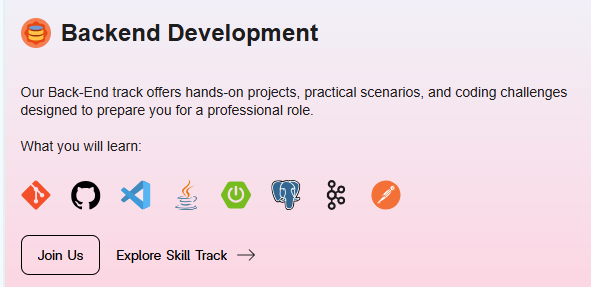
Rather than delivering a curriculum and hoping graduates can translate it into employable skills, Archi's Academy is structured as a work simulation platform. Every project in the Frontend Development track and Backend Development track mirrors what a junior developer actually does on a real team.
You do not watch a video about pull requests. You open pull requests. You do not read about what code review feels like. You receive code reviews on actual work you produced, from experienced instructors who give the kind of feedback a senior developer gives a junior one.
The outcome is not a certificate. It is a portfolio of real work, built under real conditions, with a code review history that hiring managers can read.
| What You Get | Traditional Bootcamp | Archi's Academy |
|---|---|---|
| Structured curriculum | Yes | Yes |
| Certificate on completion | Yes | Yes |
| Guided tutorial projects | Yes | No — real project briefs |
| Portfolio you can show employers | Sometimes | Always — it's the output |
| Code review from practitioners | Rarely | Every project |
| Pull request workflow | Rarely | Built into the model |
| Simulated real team environment | No | Yes — by design |
| Skills employers can verify in an interview | Hard to guarantee | Demonstrated, defensible |
This is not a critique of bootcamps as a category. Many produce strong graduates. It is an honest observation that the gap most bootcamp graduates struggle with — the gap between knowing syntax and working like an engineer — is exactly what work simulation directly addresses.

Frequently Asked Questions
Is a coding bootcamp worth it in 2026?
For the right candidate, yes. 79% of coding bootcamp graduates report employment in technical roles, with average starting salaries around $69,000 — a 51% increase over pre-bootcamp earnings. The investment typically pays back within 14–18 months. The key qualifiers are choosing a program with independently verified outcomes, a project-based curriculum, and real code review — not just lecture and guided tutorials.
How much does a coding bootcamp cost in 2026?
Most coding bootcamps charge between $12,000 and $20,000 for a full-time program. The industry average across 600+ programs is approximately $11,874–$14,142. Some programs offer Income Share Agreements (ISAs) where tuition is repaid as a percentage of post-employment income. Free and low-cost alternatives exist, though they require significantly more self-direction.
How long does a coding bootcamp take?
Full-time coding bootcamps typically run 3 to 6 months. Part-time programs, designed for people who cannot stop working, typically run 6 to 12 months. Becoming genuinely job-ready usually takes an additional 3 to 6 months of portfolio building and job searching after program completion, making 9 to 12 months a realistic end-to-end timeline.
Coding bootcamp vs computer science degree: which is better?
For speed and cost, a coding bootcamp wins. For long-term career ceiling, compensation access at top-tier firms, and research-oriented roles, a CS degree holds an advantage — particularly in the first two years. After five years of working experience, how you originally learned to code becomes largely irrelevant, and employers evaluate track record, portfolio, and demonstrated judgment.
What coding bootcamp has the best outcomes?
Programs with independently verified outcomes through CIRR (Council on Integrity in Results Reporting) provide the most trustworthy data. Beyond verification, look for programs with project-based curricula, practitioner-led code review, and transparent breakdowns of placement rates specifically in software engineering roles — not just "technical roles" broadly.
Do employers care if you went to a coding bootcamp?
72% of employers say coding bootcamp graduates are as prepared as degree-holding candidates. 53% of employers have removed degree requirements entirely from job postings. In practice, hiring managers evaluate portfolio quality, technical interview performance, and evidence that a candidate can actually build and defend what they say they built. The credential matters less than what you can show.
What is the difference between a coding bootcamp and a work simulation program?
A coding bootcamp delivers instruction and projects designed to teach skills. A work simulation program structures the entire learning experience around real engineering conditions: scoped project briefs, pull request workflows, code review from experienced practitioners, and portfolio outputs that reflect how professional teams actually build software. The distinction matters because employers do not verify certificates — they evaluate portfolios and ask how you made your decisions.
The Bottom Line
Coding bootcamps work. The data in 2026 supports them as a legitimate, faster, and more affordable path into software development than a four-year degree — for candidates who choose carefully, commit fully, and prioritise programs that build real, demonstrable skills.
The ones that succeed are not the ones with the most impressive marketing or the highest claimed placement rates. They are the ones that most closely simulate real engineering work — because that is what the job market is actually evaluating.
Learn by Doing. Prove by Doing. Get Hired.
Deciding between a coding bootcamp, a work simulation track, or another learning path? The Archi's Academy team works with career changers and early developers every day — reach out anytime.

Pazartesi, May 11, 2026