



Automation
Testing
Mocha Testing in 2026: Why Every JavaScript Developer Needs to Write Tests That Actually Run
Code that works on your machine isn't enough. Code that works when someone else changes it, deploys it, and runs it six months from now - that's what tests give you.

The Moment You Realize You Need Tests
You've built a feature. It works perfectly. You've clicked through every flow, tested every edge case you could think of, and shipped it to production. Success.
Two weeks later, a teammate refactors a utility function your feature depends on. The build passes. The deployment succeeds. The feature breaks silently in production. Users start reporting errors. You spend an afternoon debugging something that wasn't even your code.
Here's the thing: If you'd written tests, the refactor would have failed locally before it ever reached production. The CI pipeline would have blocked the merge. The bug would have been caught in seconds, not discovered by users.
That's not a hypothetical scenario. That's Tuesday for every team that doesn't have automated testing. And in 2026, where continuous deployment is the default and teams ship multiple times per day, code without tests is code that will break - it's just a matter of when.
Mocha is one of the most widely used JavaScript testing frameworks because it gives you the tools to prevent this. Not by making testing complicated - by making it natural. By letting you describe what your code should do, then automatically verifying it does exactly that, every single time.
What Mocha Actually Is
Mocha is a feature-rich JavaScript testing framework that runs on Node.js and in the browser. It provides the structure for writing and running tests - the
describe blocks that group related tests, the it blocks that define individual test cases, and the hooks that let you set up and tear down test conditions.Mocha itself doesn't include assertions (the actual "check if this equals that" logic) - it's deliberately minimal. You pair it with an assertion library like Chai, Should.js, or Node's built-in
assert, and together they give you a complete testing environment.Here's what a basic Mocha test looks like:
const assert = require('assert');
const { calculateTotal } = require('./cart');

describe('Shopping Cart', () => {

  it('should calculate correct total for single item', () => {
    const total = calculateTotal([{ price: 10, quantity: 2 }]);
    assert.strictEqual(total, 20);
  });

  it('should handle empty cart', () => {
    const total = calculateTotal([]);
    assert.strictEqual(total, 0);
  });

  it('should apply discount correctly', () => {
    const total = calculateTotal([{ price: 100, quantity: 1 }], 0.1);
    assert.strictEqual(total, 90);
  });

});
Three tests. Three specific scenarios. If any of these fail, you know exactly which case broke and why. That's the power of structured testing.
Why Mocha Still Matters in 2026
JavaScript has evolved massively. New testing tools emerge constantly - Jest, Vitest, Playwright, Cypress. So why does Mocha, a framework first released in 2011, still hold relevance?
1. It's Unopinionated and Flexible
Mocha doesn't force you into a specific assertion library, mocking framework, or project structure. You choose what works for your stack. This flexibility is why it's still widely used in both legacy codebases and greenfield projects - it adapts to you, not the other way around.
2. It Runs Everywhere
Mocha works in Node.js for backend testing and in browsers for frontend testing. The same framework can test your Express.js API routes and your React components. One tool, full-stack coverage.
3. The Ecosystem Is Mature
Thousands of plugins, integrations with CI/CD pipelines, extensive documentation, and a massive community. When you encounter an edge case, someone has solved it before and documented the solution.
4. It Teaches You Testing Fundamentals
Learning Mocha means learning the core concepts that apply to every testing framework: test suites, test cases, setup/teardown hooks, asynchronous testing, and test isolation. Once you understand Mocha, picking up Jest or Vitest is trivial - because the principles are identical.
The Six Hooks That Make Testing Manageable
Mocha provides six hooks for controlling the test lifecycle. These are critical for writing clean, isolated tests.
describe()
Groups related tests together into a test suite. Think of it as a folder for organizing tests logically.
describe('User Authentication', () => {
  // All auth-related tests go here
});
it()
Defines a single test case. Each
it block should test one specific behaviour.it('should reject invalid email format', () => {
// Test logic here
});
before()
Runs once before all tests in a
describe block. Use it to set up expensive resources like database connections.before(() => {
// Connect to test database
});
after()
Runs once after all tests in a
describe block. Use it to clean up resources.after(() => {
// Close database connection
});
beforeEach()
Runs before each individual test. Use it to reset state between tests so they don't affect each other.
beforeEach(() => {
  // Clear the shopping cart
});
afterEach()
Runs after each individual test. Use it for per-test cleanup.
afterEach(() => {
  // Clear cookies or session data
});
The pattern:
before and after are for suite-level setup. beforeEach and afterEach are for test-level isolation. Understanding when to use which hook is what separates flaky tests from reliable ones.Mocha + Assertion Libraries: The Winning Combinations
Mocha provides the structure. Assertion libraries provide the actual checks. Here are the most common pairings:
Chai - The Most Popular Choice
Chai offers three assertion styles:
should, expect, and assert. You pick the style that reads most naturally to you.const { expect } = require('chai');
expect(total).to.equal(100);
expect(user.isActive).to.be.true;
expect(items).to.have.lengthOf(3);
Should.js - Expressive BDD-Style
Should.js extends objects with a
.should property, making assertions read like natural language.total.should.equal(100);
user.isActive.should.be.true();
Node's Built-In assert
No dependencies. Perfect for simple tests where you don't need the expressiveness of Chai or Should.
const assert = require('assert');

assert.strictEqual(total, 100);
assert.ok(user.isActive);
In 2026, Chai remains the default pairing with Mocha. Its
expect syntax is widely recognized, well-documented, and supports complex assertions out of the box.Real-World Testing Workflow with Mocha
Let's walk through how Mocha fits into an actual development workflow.
Step 1: Write the Test First (TDD Style)
You're building a new feature - a discount code validator for an e-commerce checkout. Before writing any implementation code, you write the tests that describe the expected behaviour:
describe('Discount Code Validator', () => {

  it('should accept valid discount codes', () => {
    const isValid = validateDiscountCode('SAVE20');
    expect(isValid).to.be.true;
  });

  it('should reject expired codes', () => {
    const isValid = validateDiscountCode('EXPIRED');
    expect(isValid).to.be.false;
  });

  it('should handle case-insensitive codes', () => {
    const isValid = validateDiscountCode('save20');
    expect(isValid).to.be.true;
  });

});
Step 2: Run the Tests (They Fail)
You run
npm test. All three tests fail because validateDiscountCode doesn't exist yet. This is expected - and good. Failing tests first proves the tests actually work.Step 3: Write the Implementation
Now you write the actual
validateDiscountCode function to make the tests pass.Step 4: Run the Tests Again (They Pass)
Green checkmarks. The feature works as specified.
Step 5: Refactor with Confidence
Weeks later, you refactor the validation logic to improve performance. You run the tests. They still pass. You know the behaviour hasn't changed, even though the implementation has.
This is Test-Driven Development (TDD) - and Mocha's structure makes it natural.
Testing Asynchronous Code with Mocha
JavaScript is asynchronous by nature - API calls, database queries, file I/O all happen asynchronously. Mocha handles this elegantly.
Using Callbacks
it('should fetch user data', (done) => {
  fetchUser(123, (err, user) => {
    expect(user.name).to.equal('Alice');
    done(); // Signals the test is complete
  });
});
Using Promises
it('should fetch user data', () => {
  return fetchUser(123).then(user => {
    expect(user.name).to.equal('Alice');
  });
});
Using Async/Await (Cleanest)
it('should fetch user data', async () => {
  const user = await fetchUser(123);
  expect(user.name).to.equal('Alice');
});
In 2026, async/await is the standard. It's the most readable, the most maintainable, and the most widely used pattern for async testing.
Mocha in CI/CD Pipelines
Tests are only valuable if they run automatically. In modern workflows, Mocha tests run on every commit via CI/CD pipelines - GitHub Actions, GitLab CI, CircleCI, etc.
A typical
.github/workflows/test.yml file:name: Run Tests
on: [push, pull_request]
jobs:
test:
runs-on: ubuntu-latest
steps:
- uses: actions/checkout@v3
- uses: actions/setup-node@v3
with:
node-version: '20'
- run: npm install
- run: npm test
Every push triggers the tests. If any test fails, the pipeline fails, and the code doesn't merge. This is how teams ship confidently at scale.
Common Mistakes When Learning Mocha
Writing tests that depend on each other. Each test should be completely isolated. If Test B only passes when Test A runs first, your tests are fragile. Use
beforeEach to reset state.Not testing edge cases. Happy path tests are easy. But what happens when the API returns a 500 error? When the user enters an empty string? When the database connection fails? Edge cases are where bugs hide.
Skipping assertions. A test without assertions is a test that always passes - which means it's not testing anything. Every
it block needs at least one assertion.Ignoring async issues. Forgetting
await, not returning promises, or not calling done() in callback-based tests leads to false positives - tests that pass even when the code is broken.Where to Learn Testing with Mocha
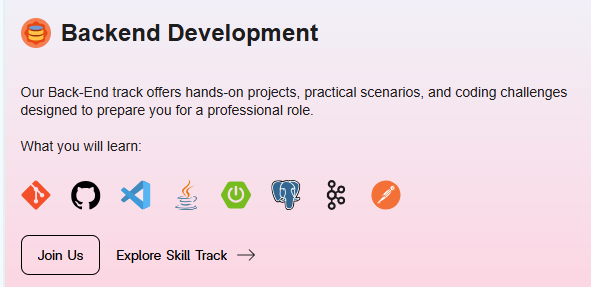
Understanding testing frameworks is inseparable from understanding the code you're testing. At Archi's Academy, testing is woven into both the Backend Development track and Frontend Development track - because testing isn't a separate skill, it's part of writing professional code.
The Software Testing Foundation course covers the broader testing lifecycle (STLC), giving you the context for why tests matter and how they fit into the development process.

Learn by Doing. Prove by Doing. Get Hired.

Have questions about testing, Mocha, or where testing fits into your learning roadmap? The Archi's Academy team is here to help - reach out anytime.

Çarşamba, Mar 17, 2021